
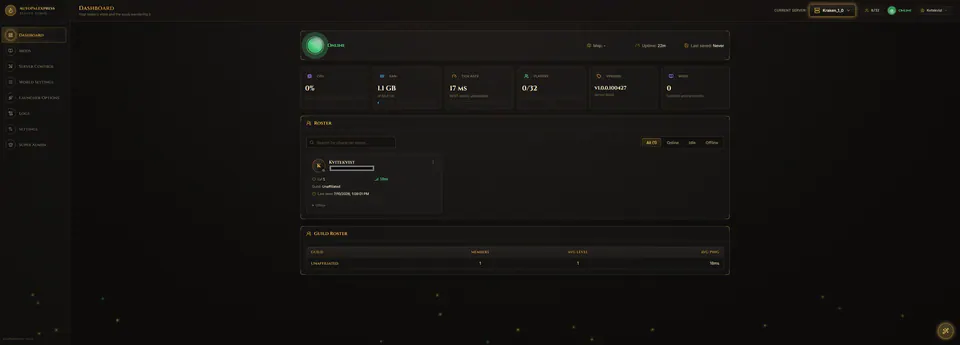
AutoPalExpress
Source-listedA standalone server utility for managing automated Palworld workflows.
Palworld 1.0ToolServerServerTools
Source checked Aug 12, 2026 · PalModsPalworld 1.0 directory
Standalone utilities and tools for Palworld server owners and mod users.
A standalone server utility for managing automated Palworld workflows.

Bundle convenience controls for resources and everyday world management.
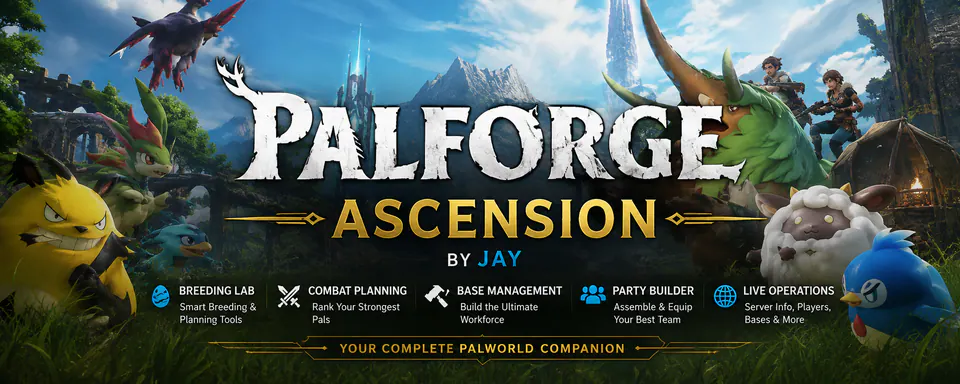
An in-game companion for breeding, Palbox analysis, Paldex intelligence, party building and base planning.
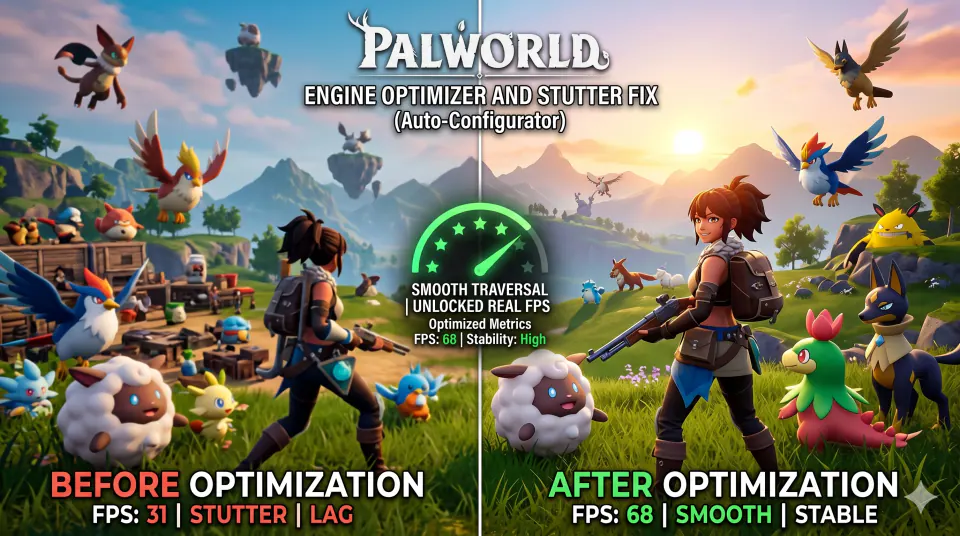
A lightweight Palworld 1.0 configuration focused on traversal stutter, VRAM streaming and image-quality settings.
Clear a filter or use a broader name or feature.
Selection and compatibility guide
Palworld modding tools support server automation, data projects, package management and repeatable maintenance rather than directly changing one game mechanic. They are most useful for server administrators, advanced players and creators who understand file permissions, backups and external utilities. A useful listing should make its purpose narrow enough to understand before installation and should identify its current source, format, version support and multiplayer side. Those labels reduce uncertainty, but they do not replace the publisher's requirements or changelog.
Begin with the problem you can describe and reproduce. For this category, the important systems include standalone processes, PalSchema projects, configuration generation, server workflows and package organization. Write down the current behavior before changing it. That baseline lets you decide whether a result actually improved and gives you a specific rollback point if the package introduces another problem.
Prefer one focused change over a bundle whose features overlap several packages already in the world. For example, a standalone automation utility belongs outside the game unless its documentation says otherwise, unlike a UE4SS script. A broad bundle is not automatically bad, but it creates more interactions to test and makes later removal harder. Read the complete feature list and identify every system it touches.
Check whether the source explains defaults, configurable values and known conflicts. Screenshots and short descriptions show the intended outcome; requirements and issue reports reveal the operational cost. When two Palworld modding tools change the same value or object definition, choose one unless both publishers explicitly document how load order and compatibility work.
Tools may be executables, scripts, schema projects or configuration packages, so there is no universal Mods folder. Steam Workshop subscriptions are enabled through Palworld 1.0 Mod Management. Manual UE4SS installations use the correct loader in the Steam Win64 or Game Pass WinGDK binaries directory. Pak and LogicMods packages belong only in the content path named by the author. PalSchema and standalone tools follow their own project instructions.
Do not infer a destination from the category name. “Gameplay,” “server,” “building” or “tool” describes intent, not file type. Preserve the archive's folder structure, install every declared dependency and avoid copying a DLL from an unrelated guide. If the source does not clearly identify a current Palworld version or required loader, postpone installation until that information is available.
A management tool can operate on the server or its files without being a mod that every connecting client installs. Treat Client, Server and Both as deployment labels. Client means a player-side installation; Server means a host-side component; Both means the current instructions may require a matching setup. The publisher page remains authoritative because networking requirements can change between releases.
For multiplayer, stop the server before changing files and use a maintenance window. Back up the world, configuration and the previous working package set. Start with one test client whose files match the planned deployment. Check joining, the modified feature, travel, inventory or crafting as relevant, then save, restart and reconnect. A successful process launch alone does not prove that synchronized data is correct.
This workflow takes longer than copying several archives at once, but it preserves evidence. If the fifth step creates a failure, the last change is the first thing to inspect. If ten unrelated packages were installed together, every loader, dependency and content file becomes a suspect.
The acceptance test for this category is specific: the tool performs one documented task, writes only expected files, reports failures clearly and leaves a reversible audit trail. Repeat the action more than once and watch for delayed problems during saving, world loading or a server restart. If the package exposes configuration, test its default behavior before changing several values.
Keep a short test log with the game version, loader version, package version and result. Note whether the test used solo play, a listen server or a dedicated server. That record makes a later update comparable instead of relying on memory. It also helps when reporting a reproducible issue to the author.
Update the game, loader and mods as separate operations. First disable optional packages and confirm that unmodified Palworld reaches the menu or that the dedicated server starts. Next update the required loader and test it without gameplay packages. Finally restore current releases one at a time. This order prevents an old dependency from being mistaken for a broken game update.
The main category risk is that running unknown executables, granting unnecessary permissions or following instructions for an older build increases operational risk. A startup crash points first to duplicate loader files, outdated dependencies or early-loading code. A world-load crash points more often to content or save references. Infinite loading in multiplayer can indicate that server and client files do not agree. Return to the original source and its issue tracker rather than downloading an unknown re-upload.
Disable Workshop entries in Mod Management before unsubscribing. For a manual package, use the original archive or your installation record to remove only the files that were added. Do not delete a complete Paks, Mods, Win64 or WinGDK directory. Shared dependencies may still be required by another package.
Content changes can remain represented in a save after their files are removed. Test removal on a copy, dismantle author-added structures when instructed and restore the last known-good backup if references are missing. Steam file verification repairs normal game files; it does not reconstruct damaged world data. A reversible setup is part of choosing good Palworld modding tools, not an extra step after something breaks.
Review the source again after every Palworld patch. Compatibility is a current release property, not a permanent promise attached to a familiar mod name.